
Why Finding the Best Web Designers for Small Business Matters
Best web designers for small business create more than just pretty pages—they build digital storefronts that drive real results. The right designer combines technical skill, strategic thinking, and an understanding of what small businesses need to succeed online.
Quick Answer: What to Look for in Top Web Designers
- Strong UX/UI expertise – Sites that are intuitive and conversion-focused
- Mobile-first design approach – Works flawlessly on all devices
- SEO and marketing knowledge – Built to be found on Google
- Platform specialization – WordPress, e-commerce, or custom solutions
- Transparent pricing and timelines – Clear communication from day one
- Proven portfolio – Real results for businesses like yours
- Ongoing support – Maintenance, updates, and optimization
Why This Decision Is Critical
Your website is your first impression. Visitors form an opinion in just 50 milliseconds, and 48% judge your credibility based on your site’s design.
For small businesses, the stakes are high. A poorly designed site costs you customers: 88% of users won’t return after a bad experience, 38% will leave if the layout is unattractive, and over half will abandon a site that takes more than three seconds to load on mobile.
Meanwhile, 70% of small business sites lack a clear call to action, meaning they aren’t set up to convert visitors.
The Challenge for Small Businesses
Small business owners face budget constraints, limited time, and the overwhelming technical side of web design. You might encounter agencies with hidden fees, DIY builders that demand technical skills, or freelancers who disappear mid-project.
But the right web designer changes everything. They become a strategic partner who understands your goals and customers, turning your website into a 24/7 sales tool.
I’m Christian Daniel, founder of Christian Daniel Designs. I help small businesses, hotels, and restaurants across the U.S. build custom websites that drive real results, from lead generation to direct bookings. My work emphasizes conversion-focused design, mobile optimization, and measurable outcomes to be among the best web designers for small business.
First, Define Your Website’s Mission
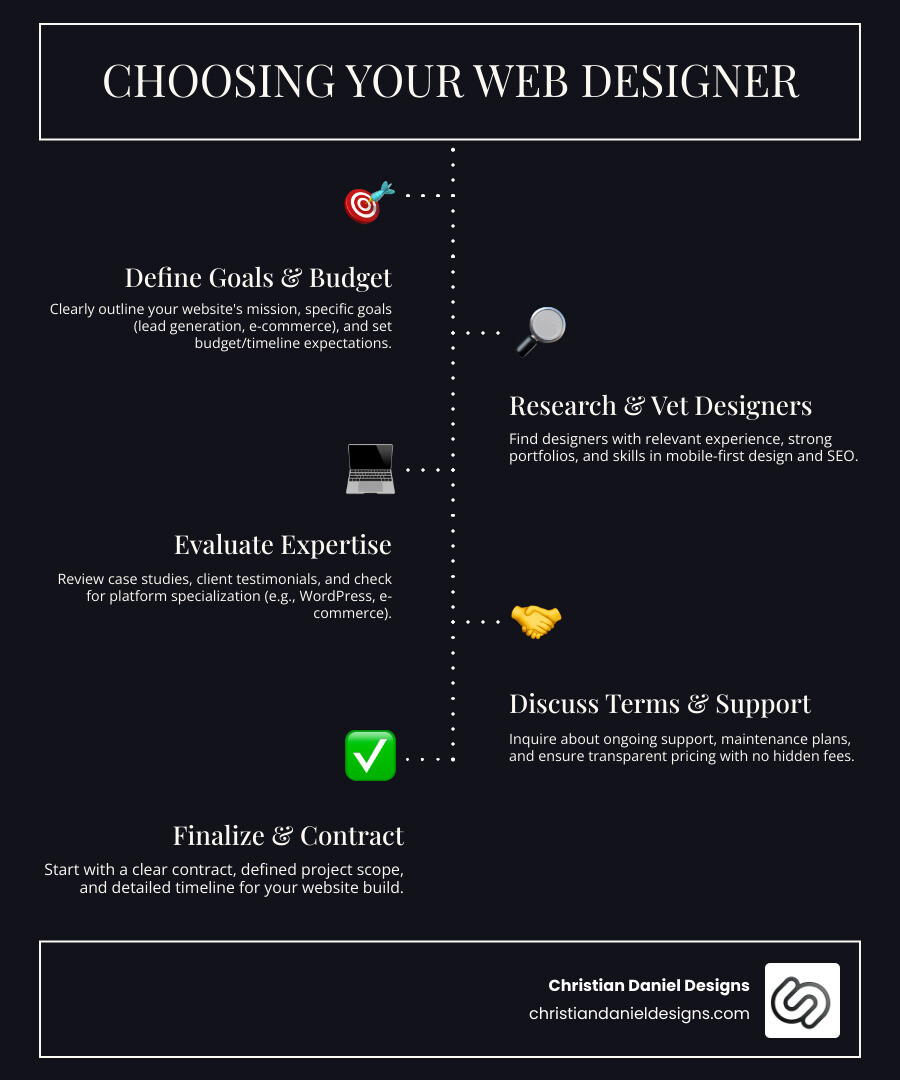
Before searching for the best web designers for small business, first define what you want your website to achieve. It’s not just about aesthetics; it’s about setting clear objectives to guide your design partner and measure success.
To determine your website needs, understand your business goals and target audience. Ask yourself:
- Lead Generation: Are you a service-based business (like a consultant or lawyer) looking to capture contact information from potential clients? Your site will need prominent contact forms, clear service explanations, and compelling calls to action.
- E-commerce Sales: Do you plan to sell products directly online? You’ll need a robust e-commerce platform with secure payment processing, inventory management, and an intuitive shopping cart. Consider if you’ll sell physical products, digital downloads, or memberships.
- Branding & Awareness: Is your primary goal to establish a strong brand identity and build credibility? Your site will focus on high-quality visuals, engaging content, and a design that reflects your brand’s personality.
- Information Hub: Do you need a place for customers to find essential information, like your hours, location, or menu? Clarity, easy navigation, and up-to-date information will be paramount.
Setting clear goals is crucial. Your website should be a strategic asset, not just an online brochure. For more guidance, see our Small Business Website Design Guide.
A common pitfall is creating a site without a clear purpose. Since 70% of small-business sites lack an obvious call to action, don’t let yours be one of them. A great web designer will help you strategically place CTAs to guide visitors toward your desired outcome, whether it’s booking a service, making a purchase, or getting in touch.
Key Qualities of the Best Web Designers for Small Business
Now that you’ve got your mission in mind, let’s talk about the superpowers the best web designers for small business bring to the table. These aren’t just folks who know how to code; they’re strategists, artists, and problem-solvers.

This section will act as a checklist for business owners.
Expertise in User-Centric (UX/UI) Design
User Experience (UX) is how a site feels, and User Interface (UI) is how it looks. Both are critical. A beautiful but unusable website is like a car without an engine—it won’t get you anywhere.
A user-centric design agency prioritizes making your website easy, enjoyable, and efficient for visitors. This means:
- Intuitive Navigation: Can users easily find what they’re looking for?
- Clear Information Hierarchy: Is the most important information presented clearly?
- Accessibility: Is your site usable for everyone, including those with disabilities?
- Conversion Focus: Does the design guide users towards your business goals (e.g., making a purchase)? This is where our expertise in Conversion Focused Web Design shines.
This matters because 88% of users won’t return after a bad experience. Since only 55% of companies test their UX, there’s a massive opportunity for businesses that get it right. A designer who understands UX/UI makes your site effective, not just pretty.
Mobile-First and Responsive Design Skills
Your website must function flawlessly on all devices, from smartphones to desktops. This is where mobile-first and responsive design are essential.
Responsive design automatically adjusts your site’s layout to fit any screen size. This is critical, as 74% of users return to mobile-friendly sites, and over 54% of global web traffic is mobile. Not being mobile-friendly alienates a majority of your audience. We ensure a consistent experience with robust Responsive Website Design.
A mobile-first approach means designing for the smallest screen first, prioritizing performance and usability. Speed is paramount: a one-second delay can cut conversions by 7%, and over half of visitors leave if a mobile page takes longer than three seconds to load. We implement Mobile Optimization strategies from the ground up. For a deeper dive, explore this responsive design definition.
Proficiency in SEO and Digital Marketing
A stunning website is useless if no one can find it. That’s why expertise in SEO (Search Engine Optimization) and PPC (Pay-Per-Click) is vital for growth.
- SEO: This is the practice of ranking higher in search results. A good designer builds SEO best practices—like keyword research, meta descriptions, and site speed optimization—into your site’s structure to drive organic traffic. It’s how you get your web page first on Google.
- PPC: This provides immediate visibility through targeted ads. An agency proficient in both can create a powerful synergy, using PPC data to inform your long-term SEO strategy.
The synergy between SEO and PPC ensures a steady flow of customers and maximizes marketing ROI. A web design partner with strong digital marketing skills understands your website is the hub for these efforts. Learn more about our approach to Small Business Online Marketing.
Platform Specialization (e.g., WordPress, E-commerce)
The best web designers for small business often specialize in key platforms to deliver exceptional results. Understanding these specializations is key to choosing the right partner.
WordPress Website Design Agencies: WordPress powers over 40% of the internet and is known for its flexibility, scalability, and SEO-friendliness. A WordPress agency builds custom sites on this platform, leveraging its vast plugin ecosystem. We recommend it for businesses needing a robust, scalable content management system (CMS) they can easily update.
E-commerce Website Design Agencies: To sell online, you need an e-commerce specialist. These agencies build online stores optimized for conversions, security, and user experience. They understand shopping carts, payment gateways, and inventory management. For hotels and restaurants, this means integrating smooth, secure booking and ordering systems. Our expertise includes WooCommerce, a leading e-commerce solution for WordPress.
Choose a WordPress specialist for content-heavy sites, lead generation, or brochure sites with growth potential. Choose an e-commerce agency if you’re selling directly online and need a secure, optimized sales funnel. A specialized agency offers deep expertise, while a full-service agency provides broader services. We believe the best approach combines a specialized web design team with a strong understanding of broader digital marketing. For more on custom solutions, see our Custom Website Small Business Guide.
Choosing the Right Web Design Partner for Your Business
Finding the perfect web design partner is a lot like dating – you need to know what you’re looking for. This section will help you steer that process.
Your choice will hinge on your budget, project complexity, technical skill level, and long-term business goals.
Custom Website Solutions
A custom website is the gold standard for many small businesses. While builders like Wix or Squarespace offer simplicity, they have limitations in flexibility, functionality, and scalability. The best web designers for small business often advocate for custom solutions because they allow for:
- Unique Branding: Your website will truly reflect your brand’s identity, making you stand out.
- Flexible Features: A custom build can accommodate virtually any functionality, like a specific booking system for a hotel or a unique menu display for a restaurant.
- Scalability: As your business grows, your website can grow with it, without hitting a platform’s limitations.
- Personalized Support: You often get more dedicated support custom to your specific site.
A custom website is an investment that pays dividends, offering control and uniqueness that templates can’t match. Learn more in our Custom Website Small Business Guide.
Collaborative Approach
Your relationship with a web designer should be a partnership. The best web designers for small business use a collaborative approach to understand your vision and business needs. This means:
- Direct Communication: You should feel comfortable speaking directly with your design team.
- Understanding Your Business: They should ask probing questions about your industry, target audience, and competitors.
- Niche Expertise: Look for designers with experience in your niche. Their knowledge can save time and lead to a more effective site.
- Efficient Project Management: A good partner will have a clear process, keeping you informed and involved.
This collaborative spirit transforms a good website into a great one. For advice, read our guide on How to Find a Web Designer for Small Business.
Full-Service Capabilities
While a specialized agency is great for development, some businesses benefit from a partner with full-service capabilities, handling not just design and development, but also:
- SEO & PPC: Getting found online is paramount.
- Content Marketing: Crafting compelling copy and blog posts to engage your audience.
- Branding: Ensuring your website integrates seamlessly with your overall brand identity.
- Social Media Marketing: Integrating your website with your social presence.
A full-service approach provides integrated strategies. One team ensures everything works together, leading to more efficient campaigns and a stronger digital presence. For more insights, read our article on What a Full Service Marketing Agency Can Do For Your Brand. For NYC businesses, a local full-service partner is a significant advantage.
The Vetting Process: How to Choose Your Design Partner
So, you’ve defined your mission and you know what qualities to look for. Now comes the crucial step: vetting potential partners. This is where you do some serious due diligence to find a trustworthy and effective ally among the best web designers for small business.
Vetting Portfolios: A Key Step to Find the Best Web Designers for Small Business
When evaluating an agency’s portfolio, don’t just glance at the visuals. Dig deeper:
- Industry Relevance: Have they worked with businesses similar to yours? If you’re a hotel, look for hotel websites they’ve designed.
- Design Aesthetic: Do their past projects align with the style you envision? 38% of users will leave if a layout is unattractive.
- Functionality Check: Click around the sites. Do they load quickly and are they easy to steer?
- Mobile Testing: Crucially, check their portfolio sites on your phone. Do they function well on a mobile device?
- Case Studies: Look for case studies that explain the client’s problem, the agency’s solution, and the results. This provides insight into their strategic thinking.
A strong portfolio is a testament to their capabilities and a preview of what they can do for you.
Understanding Costs, Timelines, and Support
Transparency in pricing, clear timelines, and robust long-term support are hallmarks of the best web designers for small business. Ask tough questions:
- Typical Costs: Website costs vary widely. A basic site averages $3,200, while a freelance designer may charge $2,000 to $50,000. Agency projects often start around $10,000. Get a detailed breakdown of what’s included in any quote.
- Transparency in Pricing: Ensure there are no hidden fees. A reputable agency will provide a clear, itemized proposal. We believe in earning your business, not locking you into opaque contracts.
- Typical Timeline: A small business website build typically takes 10–14 weeks. This includes findy, design, development, content integration, and testing. Be wary of promises that seem too good to be true, as rushing sacrifices quality. Our Process for Building High Performance Websites outlines these phases.
- Long-term Support and Maintenance: What happens after launch? This is a critical question. The best designers offer ongoing support and maintenance plans that can include:
- Regular software updates (especially for WordPress)
- Security monitoring and backups
- Performance optimization
- Technical troubleshooting
- Content updates or small design tweaks
Assess long-term support by understanding their availability, response times, and what’s covered in a maintenance agreement. A website needs continuous care to stay secure, perform well, and adapt.
Frequently Asked Questions about Web Design for Small Businesses
We hear a lot of questions from small business owners in New York City and beyond. Here are some of the most common ones:
How much should a small business expect to pay for a website?
This is a common question, and the answer is “it depends.” A basic site costs around $3,200, but a freelancer might charge $2,000 to $50,000. Agency projects often start around $10,000 and increase with complexity.
The cost depends on:
- Complexity: A simple informational site costs less than a sophisticated e-commerce platform.
- Features: A blog, booking system, or client portal will add to the cost.
- Design Uniqueness: A highly custom design takes more time than a template.
- Content Creation: Will the agency write copy or source images?
- Ongoing Services: SEO, PPC, and maintenance plans are additional investments.
Focus on value and potential return on investment (ROI), not just the lowest price. Spending more upfront for quality can save headaches and generate more revenue long-term. For budget-friendly options, explore our guide on Inexpensive Websites for Small Businesses.
How long does it take to build a small business website?
Another popular question! The typical timeline for a small business website is 10–14 weeks, though this can vary. Here are the typical phases:
- Findy & Planning (1-2 weeks): We learn about your business, goals, and audience.
- Design & Prototyping (3-5 weeks): Creating wireframes and mockups for your approval.
- Development & Coding (4-6 weeks): Bringing the design to life with code.
- Content Integration (1-2 weeks): Adding your text, images, and other media.
- Testing & Revisions (1 week): Checking for bugs, responsiveness, and usability.
- Launch & Training (1 day – 1 week): Taking your site live and showing you how to manage it.
Duration depends on project complexity, client feedback speed, and content availability. An efficient feedback loop is essential to keep the project on track.
Should I hire a local web designer or a remote one?
For small businesses in New York City, this is a relevant question. Both local and remote designers have advantages:
Local Benefits (e.g., in New York City):
- Face-to-Face Meetings: Meeting in person can be invaluable for consultations, brainstorming, and building rapport.
- Local Market Understanding: An NYC-based designer will better understand the local market, trends, and regulations, including local SEO strategies.
- Networking Opportunities: Local professionals can provide valuable community connections.
Remote Benefits:
- Wider Talent Pool: You can choose from a global pool of talent with specialized skills.
- Cost Differences: Remote designers from areas with a lower cost of living may offer more competitive rates.
- Flexibility: Remote teams are accustomed to working across time zones, which can sometimes mean faster turnarounds.
The choice depends on your communication preference, budget, and needed expertise. An NYC-based designer is excellent for those who value personal connection and local insight. However, a remote team can be just as effective with a solid process. If you’re looking for Website Designers for Small Business Near Me, we recommend prioritizing local expertise.
Your Next Step to a Powerful Online Presence
From defining your mission to vetting partners, finding the best web designers for small business can feel daunting. With the right knowledge, however, you’re equipped to make an informed decision.
Your website is a critical tool for driving sales, building credibility, and connecting with customers. Since nearly 48% of people judge a company’s credibility by its site, it’s about building trust and brand authority, not just looking good.
We, Christian Daniel Designs, are an award-winning LGBTQ+ video editor and web designer in New York City. We specialize in creating custom websites and scroll-stopping videos for hotels, restaurants, and small businesses. Our focus is on driving bookings and boosting brand credibility with powerful WooCommerce functionality, ensuring your digital storefront is profitable, not just pretty.
We understand the unique challenges for businesses in New York City and are passionate about helping our clients succeed. If you’re ready to transform your online presence into a 24/7 sales engine, we’re here to help.
Ready to find the best web designers for small business and build a website that truly works for you? Let’s connect and discuss your vision.


