NYC Video Editor: Finding Professional Video Editing Services in New York City
Finding the right NYC video editor isn't about comparing hourly rates or counting software certifications. It's about understanding what separates truly professional work.
Insights
Jan 25, 2026
Finding a Professional NYC Video Editor Service in New York City
It's 11 PM on a Tuesday and you're staring at three hours of raw footage from today's product launch. Your board presentation is at 9 AM tomorrow, and what you have right now is unusable. Shaky camera work, inconsistent lighting, audio cutting in and out during the CEO's keynote. You need someone who can transform this mess into something that looks like a Madison Avenue agency produced it.
That's the reality of doing business in New York City. "Good enough" doesn't cut it here. Your competitors are across the street, and your audience has been trained by decades of world-class advertising. Your video content doesn't just need to be professional. It needs to be exceptional.
I've been editing video in this market for over 20 years, and I can tell you: finding the right NYC video editor isn't about comparing hourly rates or counting software certifications. It's about understanding what separates truly professional work from competent amateur efforts. It's knowing which specialized skills matter for your specific industry. And it's recognizing whether an editor can actually deliver Manhattan-level quality under pressure.
What Makes NYC Video Editing Different
The gap between a competent editor and an NYC editor isn't subtle. It's the difference between someone who can technically execute a cut and someone who understands that every frame competes with the visual sophistication New Yorkers encounter daily. When your audience commutes past Times Square billboards and scrolls through feeds curated by the world's top agencies, their baseline for "acceptable" sits where most markets would consider exceptional.
This isn't coastal elitism. It's market reality. A corporate video that impresses clients in most cities gets a polite nod in a Manhattan boardroom before your competitor's more sophisticated content wins the contract.
The technical demands are equally distinctive. NYC businesses operate on compressed timelines that would be unreasonable elsewhere. When a SoHo retailer needs a product launch video edited overnight because marketing got final approval at 6 PM, that's not a crisis. That's Tuesday.
Core Services I Provide
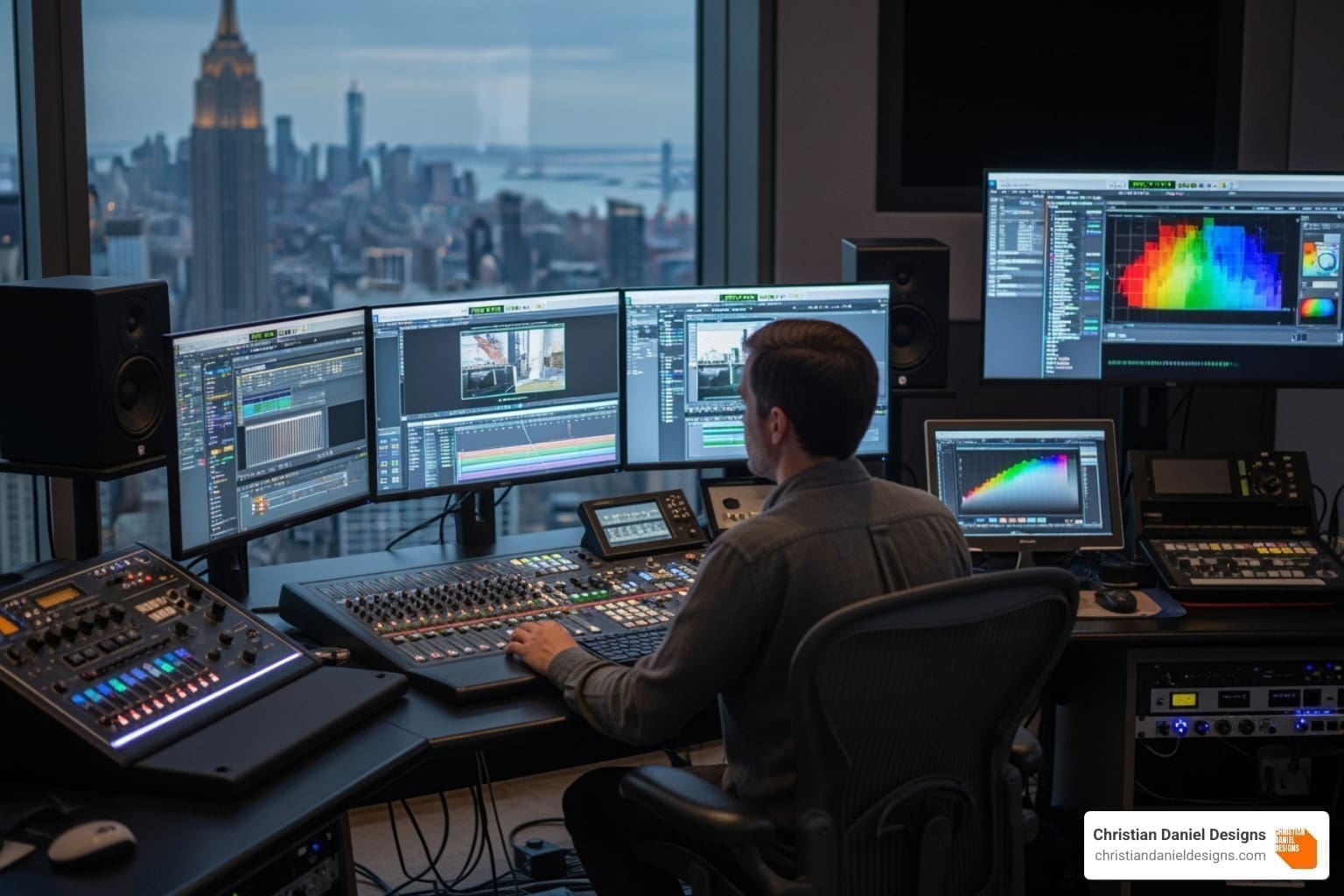
Corporate video editing goes far beyond assembly cuts. It includes color correction matched to your brand guidelines, audio mixing that balances dialogue with music, and pacing decisions that respect your audience's time while maintaining engagement.
Social media content requires understanding platform-specific needs beyond aspect ratios. Strong visual hooks in the first three seconds. Text overlays that convey messages without audio. Content structured for each platform's algorithm.
Documentary-style editing demands the ability to craft narrative from unscripted footage, identify compelling story arcs within hours of interviews, and create emotional resonance through pacing and music selection.
Event coverage means transforming hours of conference footage into digestible highlight reels. Identifying key moments quickly. Managing multiple camera angles. Creating content that captures live energy while remaining coherent for viewers who weren't there.
Specialized Skills That Matter
Color grading isn't about making footage look "better." It's about creating specific emotional responses, ensuring brand consistency, and correcting for different camera systems. I can match footage shot on three different cameras under varying lighting conditions, creating visual continuity that appears effortless.
Audio engineering matters more than most clients realize. Poor audio destroys professional video faster than any visual imperfection. Viewers tolerate less-than-perfect footage but abandon content with distracting audio issues within seconds.
Multi-camera editing requires not just technical ability to sync and switch between feeds, but editorial judgment about which angle serves the story at each moment.
Motion graphics integration has evolved from nice-to-have to fundamental requirement. This includes animated lower thirds, data visualizations, and branded transitions that enhance comprehension rather than distract.
Industry-Specific Requirements
Financial services content must convey institutional credibility while remaining engaging. Conservative visual language, measured pacing, color grading that appears natural. But conservative doesn't mean boring.
Fashion and retail demand bold visual choices, trend-aware aesthetics, and pacing that matches brand energy. Color grading becomes critical since fashion brands have specific aesthetic signatures.
Real estate has evolved beyond property tours. High-end content requires understanding architectural photography principles and using music and color to evoke lifestyle aspirations.
Technology and startups need versatility across product demos, culture videos, thought leadership content, and investor materials. Making technical concepts accessible without oversimplifying.
How to Evaluate Portfolios
Look for work matching your industry and content type rather than being impressed by the most visually striking pieces. If you need corporate interviews, a fashion lookbook tells you less than a well-executed executive interview.
Pay attention to pacing across different content types. A 30-second social clip requires different pacing than a five-minute thought leadership video.
Evaluate audio as rigorously as visuals. Listen for clean dialogue, music that supports rather than competes, and sound design that enhances without calling attention to itself.
Examine color grading consistency. Professional color work should be invisible unless stylization serves a specific purpose.
Questions to Ask Before Hiring
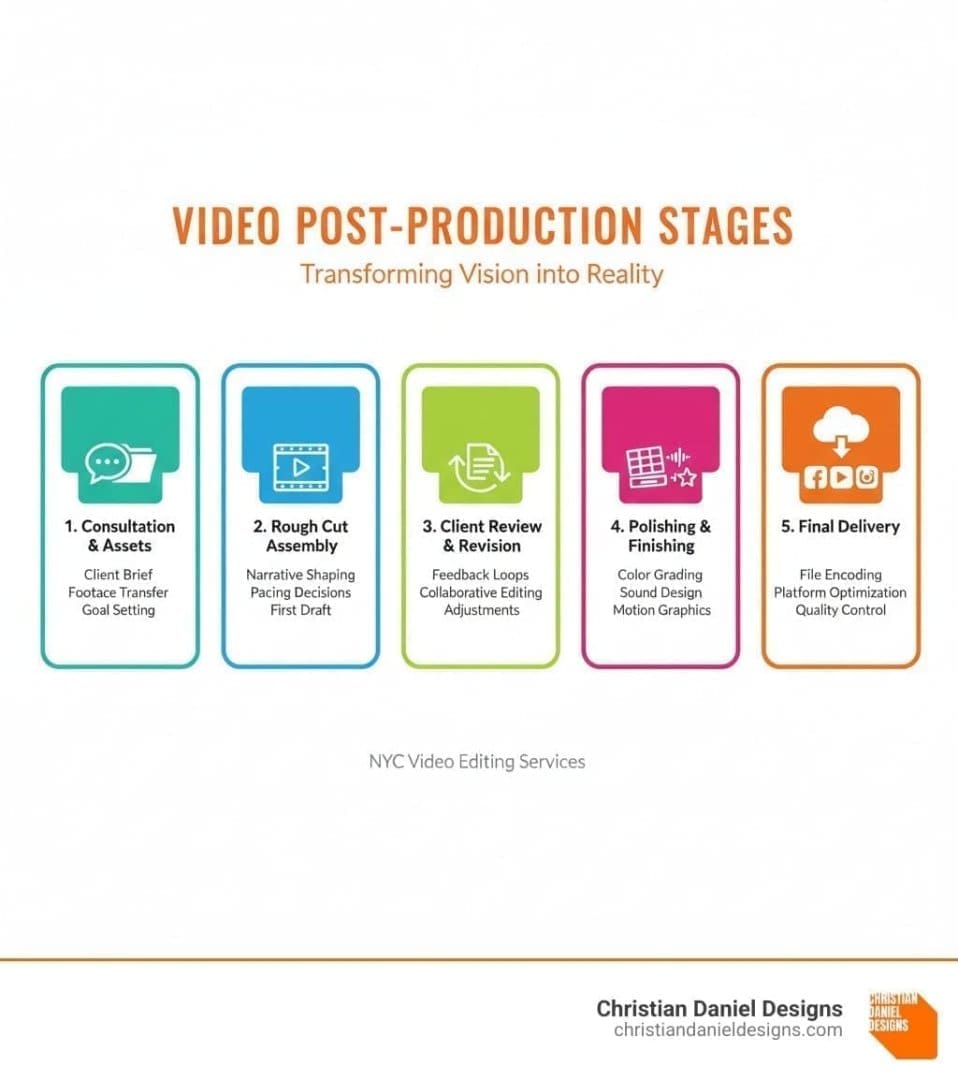
Ask about typical workflow from footage receipt to final delivery. Professional editors should articulate a clear process including rough cuts, revision rounds, and final delivery formats.
Ask how they handle footage with quality issues. Every editor encounters imperfect material. What separates professionals is the ability to salvage problematic footage through correction and strategic editing.
Discuss timeline expectations explicitly. If you need a five-minute video edited within 48 hours, know whether that's feasible before committing.
Question their approach to music licensing. Music can make or break content, and licensing issues create legal problems if mishandled.
What You Should Expect to Pay
Hourly rates for professional NYC editors typically range from $75 to $200, driven by experience, specialized skills, and complexity.
Project-based pricing offers more predictability. Simple social media edits run $500 to $1,500. Corporate interview videos typically cost $2,000 to $5,000. Comprehensive promotional videos with motion graphics often run $5,000 to $15,000.
What drives variation? Complexity of source material. Number of revision rounds. Motion graphics requirements. Advanced color grading. Rush timelines command 25 to 50 percent premiums.
If you're looking for an editor who understands NYC's demands and can deliver under pressure, let's talk.
More to Discover
NYC Video Editor: Finding Professional Video Editing Services in New York City
Finding the right NYC video editor isn't about comparing hourly rates or counting software certifications. It's about understanding what separates truly professional work.
Insights
Jan 25, 2026
Finding a Professional NYC Video Editor Service in New York City
It's 11 PM on a Tuesday and you're staring at three hours of raw footage from today's product launch. Your board presentation is at 9 AM tomorrow, and what you have right now is unusable. Shaky camera work, inconsistent lighting, audio cutting in and out during the CEO's keynote. You need someone who can transform this mess into something that looks like a Madison Avenue agency produced it.
That's the reality of doing business in New York City. "Good enough" doesn't cut it here. Your competitors are across the street, and your audience has been trained by decades of world-class advertising. Your video content doesn't just need to be professional. It needs to be exceptional.
I've been editing video in this market for over 20 years, and I can tell you: finding the right NYC video editor isn't about comparing hourly rates or counting software certifications. It's about understanding what separates truly professional work from competent amateur efforts. It's knowing which specialized skills matter for your specific industry. And it's recognizing whether an editor can actually deliver Manhattan-level quality under pressure.
What Makes NYC Video Editing Different
The gap between a competent editor and an NYC editor isn't subtle. It's the difference between someone who can technically execute a cut and someone who understands that every frame competes with the visual sophistication New Yorkers encounter daily. When your audience commutes past Times Square billboards and scrolls through feeds curated by the world's top agencies, their baseline for "acceptable" sits where most markets would consider exceptional.
This isn't coastal elitism. It's market reality. A corporate video that impresses clients in most cities gets a polite nod in a Manhattan boardroom before your competitor's more sophisticated content wins the contract.
The technical demands are equally distinctive. NYC businesses operate on compressed timelines that would be unreasonable elsewhere. When a SoHo retailer needs a product launch video edited overnight because marketing got final approval at 6 PM, that's not a crisis. That's Tuesday.
Core Services I Provide
Corporate video editing goes far beyond assembly cuts. It includes color correction matched to your brand guidelines, audio mixing that balances dialogue with music, and pacing decisions that respect your audience's time while maintaining engagement.
Social media content requires understanding platform-specific needs beyond aspect ratios. Strong visual hooks in the first three seconds. Text overlays that convey messages without audio. Content structured for each platform's algorithm.
Documentary-style editing demands the ability to craft narrative from unscripted footage, identify compelling story arcs within hours of interviews, and create emotional resonance through pacing and music selection.
Event coverage means transforming hours of conference footage into digestible highlight reels. Identifying key moments quickly. Managing multiple camera angles. Creating content that captures live energy while remaining coherent for viewers who weren't there.
Specialized Skills That Matter
Color grading isn't about making footage look "better." It's about creating specific emotional responses, ensuring brand consistency, and correcting for different camera systems. I can match footage shot on three different cameras under varying lighting conditions, creating visual continuity that appears effortless.
Audio engineering matters more than most clients realize. Poor audio destroys professional video faster than any visual imperfection. Viewers tolerate less-than-perfect footage but abandon content with distracting audio issues within seconds.
Multi-camera editing requires not just technical ability to sync and switch between feeds, but editorial judgment about which angle serves the story at each moment.
Motion graphics integration has evolved from nice-to-have to fundamental requirement. This includes animated lower thirds, data visualizations, and branded transitions that enhance comprehension rather than distract.
Industry-Specific Requirements
Financial services content must convey institutional credibility while remaining engaging. Conservative visual language, measured pacing, color grading that appears natural. But conservative doesn't mean boring.
Fashion and retail demand bold visual choices, trend-aware aesthetics, and pacing that matches brand energy. Color grading becomes critical since fashion brands have specific aesthetic signatures.
Real estate has evolved beyond property tours. High-end content requires understanding architectural photography principles and using music and color to evoke lifestyle aspirations.
Technology and startups need versatility across product demos, culture videos, thought leadership content, and investor materials. Making technical concepts accessible without oversimplifying.
How to Evaluate Portfolios
Look for work matching your industry and content type rather than being impressed by the most visually striking pieces. If you need corporate interviews, a fashion lookbook tells you less than a well-executed executive interview.
Pay attention to pacing across different content types. A 30-second social clip requires different pacing than a five-minute thought leadership video.
Evaluate audio as rigorously as visuals. Listen for clean dialogue, music that supports rather than competes, and sound design that enhances without calling attention to itself.
Examine color grading consistency. Professional color work should be invisible unless stylization serves a specific purpose.
Questions to Ask Before Hiring
Ask about typical workflow from footage receipt to final delivery. Professional editors should articulate a clear process including rough cuts, revision rounds, and final delivery formats.
Ask how they handle footage with quality issues. Every editor encounters imperfect material. What separates professionals is the ability to salvage problematic footage through correction and strategic editing.
Discuss timeline expectations explicitly. If you need a five-minute video edited within 48 hours, know whether that's feasible before committing.
Question their approach to music licensing. Music can make or break content, and licensing issues create legal problems if mishandled.
What You Should Expect to Pay
Hourly rates for professional NYC editors typically range from $75 to $200, driven by experience, specialized skills, and complexity.
Project-based pricing offers more predictability. Simple social media edits run $500 to $1,500. Corporate interview videos typically cost $2,000 to $5,000. Comprehensive promotional videos with motion graphics often run $5,000 to $15,000.
What drives variation? Complexity of source material. Number of revision rounds. Motion graphics requirements. Advanced color grading. Rush timelines command 25 to 50 percent premiums.
If you're looking for an editor who understands NYC's demands and can deliver under pressure, let's talk.
More to Discover
NYC Video Editor: Finding Professional Video Editing Services in New York City
Finding the right NYC video editor isn't about comparing hourly rates or counting software certifications. It's about understanding what separates truly professional work.
Insights
Jan 25, 2026
Finding a Professional NYC Video Editor Service in New York City
It's 11 PM on a Tuesday and you're staring at three hours of raw footage from today's product launch. Your board presentation is at 9 AM tomorrow, and what you have right now is unusable. Shaky camera work, inconsistent lighting, audio cutting in and out during the CEO's keynote. You need someone who can transform this mess into something that looks like a Madison Avenue agency produced it.
That's the reality of doing business in New York City. "Good enough" doesn't cut it here. Your competitors are across the street, and your audience has been trained by decades of world-class advertising. Your video content doesn't just need to be professional. It needs to be exceptional.
I've been editing video in this market for over 20 years, and I can tell you: finding the right NYC video editor isn't about comparing hourly rates or counting software certifications. It's about understanding what separates truly professional work from competent amateur efforts. It's knowing which specialized skills matter for your specific industry. And it's recognizing whether an editor can actually deliver Manhattan-level quality under pressure.
What Makes NYC Video Editing Different
The gap between a competent editor and an NYC editor isn't subtle. It's the difference between someone who can technically execute a cut and someone who understands that every frame competes with the visual sophistication New Yorkers encounter daily. When your audience commutes past Times Square billboards and scrolls through feeds curated by the world's top agencies, their baseline for "acceptable" sits where most markets would consider exceptional.
This isn't coastal elitism. It's market reality. A corporate video that impresses clients in most cities gets a polite nod in a Manhattan boardroom before your competitor's more sophisticated content wins the contract.
The technical demands are equally distinctive. NYC businesses operate on compressed timelines that would be unreasonable elsewhere. When a SoHo retailer needs a product launch video edited overnight because marketing got final approval at 6 PM, that's not a crisis. That's Tuesday.
Core Services I Provide
Corporate video editing goes far beyond assembly cuts. It includes color correction matched to your brand guidelines, audio mixing that balances dialogue with music, and pacing decisions that respect your audience's time while maintaining engagement.
Social media content requires understanding platform-specific needs beyond aspect ratios. Strong visual hooks in the first three seconds. Text overlays that convey messages without audio. Content structured for each platform's algorithm.
Documentary-style editing demands the ability to craft narrative from unscripted footage, identify compelling story arcs within hours of interviews, and create emotional resonance through pacing and music selection.
Event coverage means transforming hours of conference footage into digestible highlight reels. Identifying key moments quickly. Managing multiple camera angles. Creating content that captures live energy while remaining coherent for viewers who weren't there.
Specialized Skills That Matter
Color grading isn't about making footage look "better." It's about creating specific emotional responses, ensuring brand consistency, and correcting for different camera systems. I can match footage shot on three different cameras under varying lighting conditions, creating visual continuity that appears effortless.
Audio engineering matters more than most clients realize. Poor audio destroys professional video faster than any visual imperfection. Viewers tolerate less-than-perfect footage but abandon content with distracting audio issues within seconds.
Multi-camera editing requires not just technical ability to sync and switch between feeds, but editorial judgment about which angle serves the story at each moment.
Motion graphics integration has evolved from nice-to-have to fundamental requirement. This includes animated lower thirds, data visualizations, and branded transitions that enhance comprehension rather than distract.
Industry-Specific Requirements
Financial services content must convey institutional credibility while remaining engaging. Conservative visual language, measured pacing, color grading that appears natural. But conservative doesn't mean boring.
Fashion and retail demand bold visual choices, trend-aware aesthetics, and pacing that matches brand energy. Color grading becomes critical since fashion brands have specific aesthetic signatures.
Real estate has evolved beyond property tours. High-end content requires understanding architectural photography principles and using music and color to evoke lifestyle aspirations.
Technology and startups need versatility across product demos, culture videos, thought leadership content, and investor materials. Making technical concepts accessible without oversimplifying.
How to Evaluate Portfolios
Look for work matching your industry and content type rather than being impressed by the most visually striking pieces. If you need corporate interviews, a fashion lookbook tells you less than a well-executed executive interview.
Pay attention to pacing across different content types. A 30-second social clip requires different pacing than a five-minute thought leadership video.
Evaluate audio as rigorously as visuals. Listen for clean dialogue, music that supports rather than competes, and sound design that enhances without calling attention to itself.
Examine color grading consistency. Professional color work should be invisible unless stylization serves a specific purpose.
Questions to Ask Before Hiring
Ask about typical workflow from footage receipt to final delivery. Professional editors should articulate a clear process including rough cuts, revision rounds, and final delivery formats.
Ask how they handle footage with quality issues. Every editor encounters imperfect material. What separates professionals is the ability to salvage problematic footage through correction and strategic editing.
Discuss timeline expectations explicitly. If you need a five-minute video edited within 48 hours, know whether that's feasible before committing.
Question their approach to music licensing. Music can make or break content, and licensing issues create legal problems if mishandled.
What You Should Expect to Pay
Hourly rates for professional NYC editors typically range from $75 to $200, driven by experience, specialized skills, and complexity.
Project-based pricing offers more predictability. Simple social media edits run $500 to $1,500. Corporate interview videos typically cost $2,000 to $5,000. Comprehensive promotional videos with motion graphics often run $5,000 to $15,000.
What drives variation? Complexity of source material. Number of revision rounds. Motion graphics requirements. Advanced color grading. Rush timelines command 25 to 50 percent premiums.
If you're looking for an editor who understands NYC's demands and can deliver under pressure, let's talk.